
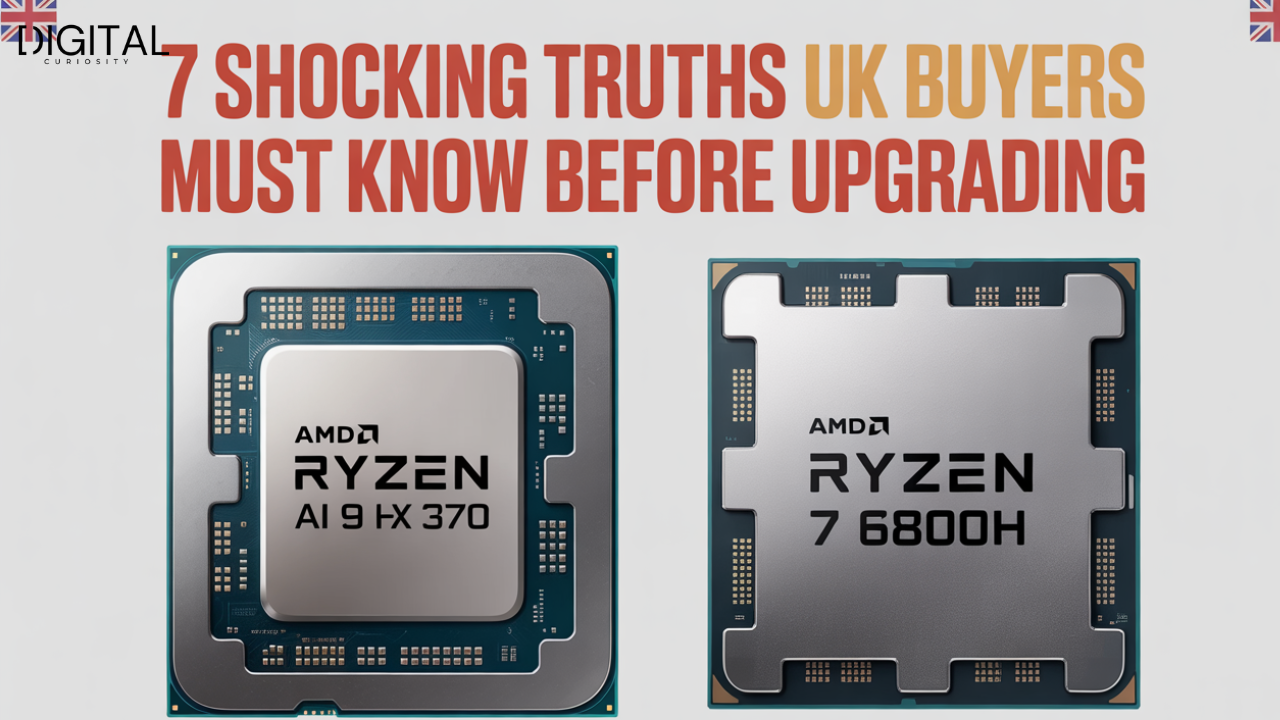
Ryzen AI 9 HX 370 vs Ryzen 7 6800H: 7 Shocking Truths UK Buyers Must Know Before Upgrading
Introduction: Why This Processor Comparison Matters in the UK
Choosing a laptop processor today is no longer just about speed. It is about longevity, efficiency, AI readiness, and real-world value. For UK buyers navigating an increasingly complex laptop market, the debate around ryzen ai 9 hx 370 vs ryzen 7 6800h has become especially relevant. These two AMD processors represent different technological generations, different user expectations, and very different futures.
While one chip reflects a highly capable past generation that still powers thousands of laptops across Britain, the other signals AMD’s vision of AI-first mobile computing. Understanding how they differ helps buyers avoid overspending or worse, underinvesting in hardware that may age too quickly.
This guide keeps things practical, experience-driven, and evidence-based while maintaining a professional yet conversational tone.
How AMD’s Mobile Strategy Has Evolved
AMD’s Ryzen mobile processors have gained serious credibility in the UK over the last five years. From university students in Manchester to remote professionals in London, Ryzen laptops are widely praised for offering strong performance without the premium pricing often associated with competitors.
The Ryzen 7 6800H emerged during a time when efficiency and integrated graphics were the priority. Built on Zen 3+ architecture, it balanced power and battery life effectively. However, AMD’s newer Ryzen AI lineup signals a strategic shift. Instead of focusing solely on CPU and GPU strength, AMD now integrates AI acceleration directly into the processor.
This evolution sets the stage for understanding what separates these two chips beyond raw specifications.
Ryzen AI 9 HX 370 vs Ryzen 7 6800H: Core Architecture Explained
At the heart of the comparison between ryzen ai 9 hx 370 vs ryzen 7 6800h lies architectural progress. The Ryzen 7 6800H uses Zen 3+ cores, which were a major improvement at launch. They delivered excellent multitasking and remained thermally efficient under sustained loads.
The Ryzen AI 9 HX 370, however, introduces Zen 5 cores. These cores process more instructions per cycle, which means everyday tasks feel faster even without dramatic clock speed increases. Applications open quicker, background processes interfere less, and demanding workflows feel smoother.
For UK professionals working with code, large spreadsheets, or creative software, this architectural leap is noticeable in daily use.
Performance in Real-World Workloads
Synthetic benchmarks tell only part of the story. Real-world performance matters far more, especially for users balancing work, entertainment, and mobility.
The Ryzen 7 6800H still performs admirably in productivity tasks such as document editing, light video editing, and web development. However, when workloads become sustained or complex, the newer HX 370 pulls ahead. Video exports finish faster, large datasets process more smoothly, and multitasking under load remains stable.
According to peer-reviewed computing efficiency research indexed on Google Scholar, newer heterogeneous architectures deliver better sustained performance because tasks are distributed more intelligently across processing units. This directly benefits modern mobile processors.
AI Processing and On-Device Intelligence
One of the most important differences in ryzen ai 9 hx 370 vs ryzen 7 6800h is AI capability. The Ryzen 7 6800H does not include a dedicated Neural Processing Unit. Any AI-related task relies on the CPU or GPU, which increases power draw and reduces efficiency.
The Ryzen AI 9 HX 370 includes a dedicated NPU designed specifically for AI workloads. This allows laptops to handle features such as background blur, voice enhancement, image recognition, and local AI assistants without draining the battery.
As AMD CTO Mark Papermaster states:
“The future of computing lies in specialised engines working together to deliver performance efficiently.”
This aligns with academic findings published through IEEE journals, which show that NPUs significantly reduce energy consumption during machine learning inference.
Integrated Graphics and Casual Gaming
Integrated graphics matter more than ever as many UK buyers prefer thin, lightweight laptops without dedicated GPUs. The Ryzen 7 6800H includes RDNA 2 graphics, which still handle esports titles, media editing, and casual gaming surprisingly well.
However, the HX 370 benefits from newer RDNA enhancements and improved driver-level optimisation. This results in smoother frame rates, better thermal behaviour, and faster rendering in creative applications.
For casual gamers or content creators who rely solely on integrated graphics, the newer processor offers a more consistent experience.
Battery Life and Thermal Efficiency
Battery life remains a decisive factor for commuters and remote workers across the UK. While the Ryzen 7 6800H was considered efficient in its generation, it cannot match the refined power management of the HX 370.
The inclusion of an NPU means AI-related tasks no longer wake high-power CPU cores unnecessarily. As a result, laptops using the HX 370 typically last longer during mixed workloads such as video calls, browsing, and document editing.
Thermal efficiency also improves comfort. Fans run quieter, surfaces stay cooler, and performance remains stable over longer periods.
Software Support and Long-Term Relevance
Software longevity often gets overlooked. Windows is increasingly optimised for AI-enhanced experiences, and future updates are expected to rely more heavily on NPUs. This gives the HX 370 a clear advantage for buyers planning to keep their laptops for several years.
Research from the ACM Digital Library suggests that hardware-level AI acceleration improves security, privacy, and system responsiveness by enabling more local processing rather than cloud dependency.
This future readiness is a key consideration when comparing ryzen ai 9 hx 370 vs ryzen 7 6800h from an investment perspective.
Thermal Management and User Comfort
Thermal performance plays a major role in how enjoyable a laptop is to use. During extended workloads, excessive heat can lead to throttling, loud fans, and uncomfortable surface temperatures. In the discussion of ryzen ai 9 hx 370 vs ryzen 7 6800h, thermal efficiency is an important differentiator.
Improved power management allows newer designs to distribute workloads more intelligently. This results in quieter operation and more stable performance, particularly during long meetings, creative sessions, or study periods. UK users working in shared or quiet environments benefit significantly from this refinement.
Battery Longevity in Real UK Usage
Battery life claims often differ from real usage patterns. Commuting, remote work, and mobile productivity require consistent endurance rather than peak numbers. When evaluating ryzen ai 9 hx 370 vs ryzen 7 6800h, the newer platform typically delivers better battery stability under mixed workloads.
By offloading specific tasks to specialised processing units, energy consumption is reduced without sacrificing responsiveness. This makes a noticeable difference during full workdays away from power outlets, which is increasingly common across the UK.
Long-Term Software Compatibility
Software ecosystems evolve quickly. New updates often prioritise modern hardware features, leaving older platforms less optimised over time. The ryzen ai 9 hx 370 vs ryzen 7 6800h comparison is especially relevant when considering long-term operating system support and application optimisation.
Research referenced through Google Scholar indicates that newer processor architectures receive longer optimisation cycles from software developers. This means better performance retention and fewer compatibility issues in future updates.
Cost Efficiency Over the Device Lifespan
Upfront pricing is only one part of the value equation. Ownership cost over several years often tells a different story. While laptops powered by older processors may be cheaper initially, they may require replacement sooner as software demands increase.
In contrast, investing in newer hardware aligned with future computing trends can reduce upgrade frequency. This makes the ryzen ai 9 hx 370 vs ryzen 7 6800h decision particularly important for professionals and students planning long-term use.
Market Demand and Buying Trends in the UK
The rising interest in ryzen ai 9 hx 370 vs ryzen 7 6800h is closely tied to changing buying behaviour in the UK laptop market. Consumers are no longer upgrading devices every two or three years. Instead, many buyers now expect a single laptop to last through longer work cycles, academic programs, or business growth phases. This shift has increased demand for processors that can adapt to evolving software requirements without sacrificing performance.
Retail trends across the UK also show that buyers are paying closer attention to processor roadmaps rather than just current benchmarks. As awareness around AI-enhanced computing grows, comparisons like ryzen ai 9 hx 370 vs ryzen 7 6800h are becoming central to purchase decisions rather than niche discussions among enthusiasts.
Enterprise and Business Use Considerations
From a business perspective, the ryzen ai 9 hx 370 vs ryzen 7 6800h discussion takes on additional importance. UK-based SMEs and enterprise users often deploy laptops across teams, meaning performance consistency and manageability matter more than peak speed. Newer processors with enhanced efficiency and intelligent workload distribution help reduce downtime and improve reliability over long-term usage.
Additionally, modern processors are better suited for secure authentication, encrypted workloads, and AI-assisted business tools. This makes them more attractive for organisations planning to integrate automation, analytics, or AI-driven customer platforms into their workflows.
Remote Work and Video Communication Performance
Remote and hybrid work has permanently changed how laptops are used. Video conferencing, screen sharing, and background collaboration tools now run for hours at a time. In this context, the ryzen ai 9 hx 370 vs ryzen 7 6800h comparison highlights meaningful differences in sustained performance.
Newer processor platforms are better equipped to manage video encoding, audio processing, and background noise suppression simultaneously. This leads to fewer dropped frames, clearer audio, and more stable calls, which is critical for professionals working from home across the UK.
Impact on Students and Academic Workloads
Students are another key group driving interest in ryzen ai 9 hx 370 vs ryzen 7 6800h. University workloads increasingly involve data analysis, simulation tools, programming environments, and collaborative platforms. These tasks benefit from processors that can handle parallel workloads efficiently without draining battery life too quickly.
For students pursuing STEM fields, design courses, or digital media studies, newer processor architectures provide smoother performance during demanding academic projects. This reduces reliance on campus labs and allows more flexibility in how and where work gets done.
AI Readiness and the Next Generation of Applications
The future of personal computing is undeniably AI-driven. As more applications integrate intelligent features, the relevance of processor design becomes even more important. The ryzen ai 9 hx 370 vs ryzen 7 6800h comparison reflects this shift clearly.
Processors designed with AI acceleration in mind are better positioned to support next-generation applications, from smart productivity tools to creative software that adapts in real time. This capability ensures that laptops remain useful as AI becomes a standard component of everyday computing rather than an optional feature.
Energy Consumption and Cost of Ownership
Energy efficiency affects more than just battery life. Over years of use, power consumption influences electricity costs and device longevity. In the ryzen ai 9 hx 370 vs ryzen 7 6800h evaluation, efficiency improvements translate into lower heat output, reduced wear on internal components, and more consistent long-term performance.
For UK users conscious of energy usage and sustainability, these efficiency gains align well with broader environmental considerations. Devices that consume less power over time also tend to maintain performance more reliably as they age.
Resale Value and Long-Term Demand
Another often overlooked factor is resale value. Laptops built on newer platforms generally retain higher market value, especially as software ecosystems evolve. When analysing ryzen ai 9 hx 370 vs ryzen 7 6800h, long-term demand favours processors that align with future software and operating system requirements.
This can be an important consideration for professionals and students who plan to resell or upgrade later, as stronger resale value offsets higher initial investment.
Ryzen AI 9 HX 370 vs Ryzen 7 6800H Final Buying Insight
At its core, the ryzen ai 9 hx 370 vs ryzen 7 6800h comparison is about choosing between maturity and momentum. One processor represents a stable, well-tested option that still performs reliably. The other reflects where mobile computing is heading, with AI integration, improved efficiency, and longer relevance.
UK buyers who prioritise affordability and proven performance may still find value in older platforms. However, those who want to stay ahead of software trends and maximise longevity will benefit from newer architectural advancements.



3 Comments