
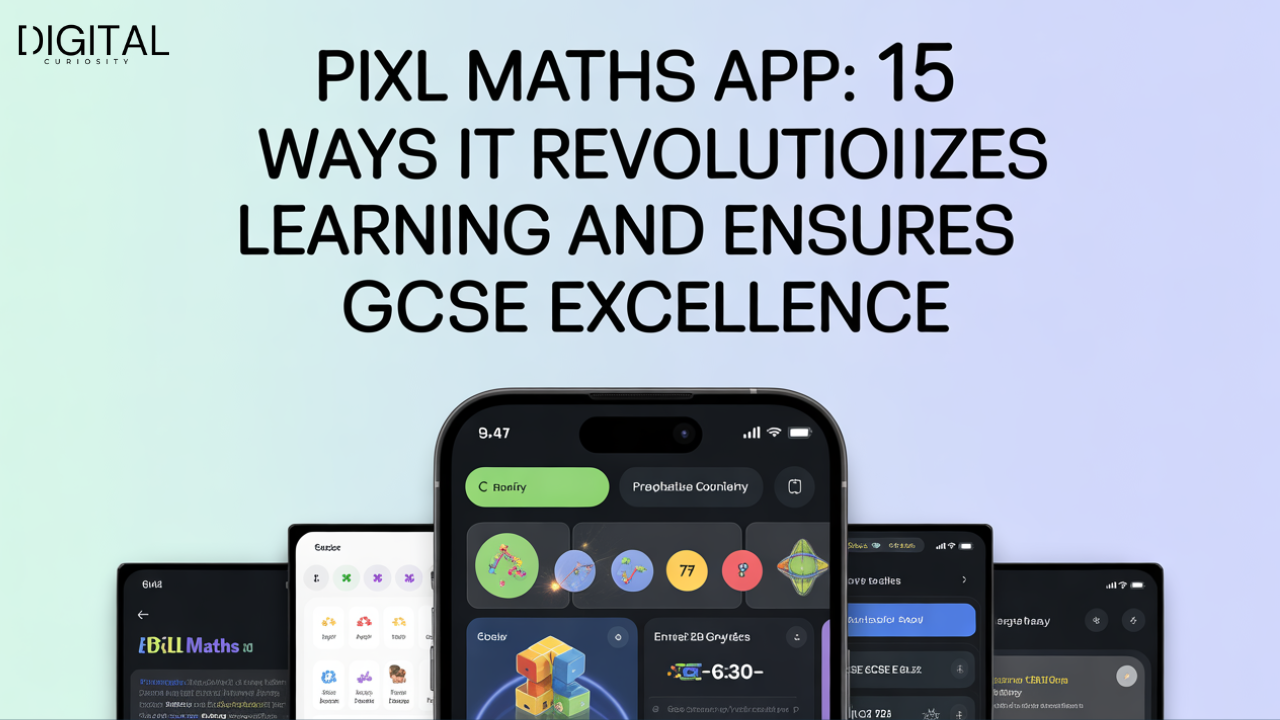
Pixl Maths App: 15 Ways It Revolutionizes Learning and Ensures GCSE Excellence
Introduction
The pixl maths app has quickly become one of the most essential educational tools for students and teachers in the United Kingdom. Its focus on personalised learning, adaptive practice, and curriculum-aligned exercises makes it a standout solution for improving mathematical understanding. Many students preparing for GCSEs, as well as teachers seeking actionable insights, now rely on this app to bridge gaps in knowledge, strengthen weak areas, and boost overall performance.
With the rise of digital learning in UK schools, apps like this are no longer just supplementary—they are central to effective revision and classroom engagement. Understanding the features, benefits, and strategies for using the pixl maths app can make the difference between struggling with maths and achieving confident mastery.
What Is the Pixl Maths App?
The pixl maths app is a digital learning platform created by The PiXL Club, a reputable UK educational organisation. It focuses on delivering targeted, personalised practice to students, helping them master specific skills in line with the national curriculum.
Unlike traditional worksheets or textbooks, the app provides immediate feedback, detailed analytics, and structured learning pathways. This ensures students focus on areas where they need improvement rather than spending time on topics they have already mastered. The pixl maths app also includes revision tools for fluency, reasoning, and problem-solving, which are crucial for success in exams.
How the Pixl Maths App Enhances Student Performance
One of the most powerful aspects of the pixl maths app is its adaptive nature. When a student completes exercises, the app identifies strengths and weaknesses, then creates personalised practice tailored to their needs. This data-driven approach reflects studies on personalised learning, which consistently demonstrate improved retention and understanding.
By targeting knowledge gaps rather than providing generic exercises, the app allows students to make faster, more meaningful progress. Teachers also benefit, as the platform automatically tracks performance and highlights areas requiring additional intervention.
Why Teachers Recommend the Pixl Maths App
Teachers in the UK praise the pixl maths app for its ability to integrate seamlessly into classroom practice. It can be used for homework, intervention sessions, or independent study, providing a versatile tool for enhancing maths education.
According to Dr. Alan Richards, an educational technology expert:
“Adaptive learning platforms like the Pixl Maths App allow students to progress at their own pace while providing teachers with actionable insights.”
This expert perspective underscores the app’s role in supporting both students and educators, making lessons more efficient and outcomes more measurable.
Curriculum Alignment and Exam Preparation
The pixl maths app is carefully aligned with the UK national curriculum, including GCSE content. It covers a range of topics from algebra and geometry to statistics and problem-solving, ensuring students receive comprehensive coverage.
Because of this alignment, students are not just practising random maths exercises—they are building exam-ready skills. Regular use of the app familiarises them with the types of questions they will encounter, reduces exam anxiety, and builds confidence in tackling complex problems.
Engagement and Motivation Through Gamification
Motivation is often a challenge in maths education, but the pixl maths app addresses this through gamification elements. Students receive instant feedback, earn points for correct answers, and unlock new levels as they progress.
This approach keeps learners engaged and encourages continued practice. Students report feeling motivated to complete daily challenges, which reinforces consistent learning and leads to measurable improvement.
Tracking Progress With Analytics
Teachers can track performance across students and classes using detailed dashboards. These analytics highlight common misconceptions, track growth over time, and help identify which skills need targeted attention.
From a strategic perspective, this data allows for evidence-based teaching decisions, ensuring that interventions are timely and effective. It also helps school leaders monitor overall attainment, making the pixl maths app a valuable tool for whole-school improvement.
Comparison With Traditional Learning Methods
Traditional maths revision often relies on worksheets or textbooks, which lack adaptability and instant feedback. In contrast, the pixl maths app responds dynamically to student input, adjusting difficulty and focus areas in real time.
Studies show that adaptive learning technologies significantly improve student outcomes compared to static methods. By combining immediate feedback with personalised content, the app enhances understanding and retention while maintaining engagement.
Supporting Students With Different Learning Needs
The app’s structured and interactive format supports diverse learning styles. Visual learners benefit from clear representations, while logical thinkers thrive on reasoning exercises. Students who require repetition and reinforcement can practice at their own pace without embarrassment or pressure.
This inclusivity makes the pixl maths app suitable for a wide range of learners, including those who might struggle with traditional classroom methods.
Long-Term Cognitive Benefits
Beyond exam preparation, the pixl maths app contributes to cognitive skill development. Regular problem-solving, reasoning tasks, and adaptive exercises improve critical thinking and mental agility.
Research from cognitive psychology journals indicates that such consistent, targeted practice strengthens neural pathways associated with mathematical reasoning. This means students gain lasting skills that extend beyond immediate academic success.
Parental Engagement and Home Learning
Parents can use the pixl maths app to support learning at home. By monitoring progress and engaging with their child’s exercises, they can provide encouragement and guidance. This partnership between school and home maximises the impact of the app.
The app’s clear interface allows parents to see progress easily, creating a transparent system that reinforces accountability and motivation.
Integrating the App Into Daily Routines
Successful use of the pixl maths app often involves integrating it into a daily or weekly routine. Short, consistent sessions are more effective than occasional long study periods.
Students are encouraged to complete targeted exercises, review feedback, and revisit areas of difficulty. This consistent practice, combined with the app’s adaptive algorithms, ensures that progress is both steady and measurable.
Security and Privacy Considerations
The pixl maths app adheres to UK data protection regulations, ensuring that student information is secure. Schools and parents can trust that personal data is handled responsibly, which is essential in today’s digital learning environment.
This compliance supports the app’s credibility and reinforces its suitability for use in formal educational settings.
The Role of AI in Adaptive Learning
Artificial intelligence underpins the adaptive capabilities of the pixl maths app. By analysing responses, predicting areas of difficulty, and adjusting exercises, the AI ensures personalised learning pathways.
This technology represents the future of edtech, making learning more efficient and targeted. As AI continues to evolve, platforms like the pixl maths app will play an increasingly central role in education.
Community Feedback and Peer Support
Students and teachers often share tips, progress reports, and experiences through online forums and social media groups. This community aspect enhances engagement and provides practical advice for using the app effectively.
Peer support complements the adaptive learning system, allowing students to feel connected and motivated while solving challenging maths problems.
Real-Life Applications of Maths Skills
Beyond exams, the skills developed through the Pixl Maths App are highly applicable to real-world scenarios. Students learn to think critically, analyse data, and solve problems—skills essential in careers such as engineering, finance, and technology. By understanding how maths applies outside the classroom, students gain motivation and context for their learning.
Accessibility and Device Compatibility
The Pixl Maths App is designed to be accessible on multiple devices, including tablets, laptops, and smartphones. This ensures students can practise anytime, anywhere. For schools with limited IT infrastructure, the app’s lightweight design and web-based functionality make it easy to integrate into lessons without technical difficulties.
Building Confidence Through Repetition
One of the key benefits of the Pixl Maths App is its ability to allow students to repeat exercises without penalty. This repetition reinforces learning, reduces anxiety, and builds confidence. Students are more likely to tackle challenging topics when they know they can practise until they master the concept.
Peer Collaboration and Group Learning
Teachers can encourage students to use the Pixl Maths App collaboratively by setting group challenges or competitions. This creates a sense of camaraderie and motivates students to improve together. Collaborative learning not only increases engagement but also encourages discussion and deeper understanding of mathematical concepts.
Teacher Professional Development
The insights from the Pixl Maths App are not only useful for students but also for teacher development. Educators can identify which teaching methods are most effective and which areas of the curriculum require more attention. This data-driven approach allows teachers to continuously refine their practice.
Encouraging Lifelong Learning Habits
Using the Pixl Maths App consistently helps students develop lifelong learning habits. By practising regularly, tracking progress, and reviewing mistakes, students cultivate discipline and a growth mindset. These habits extend beyond maths, benefiting other subjects and personal development.
Reducing the Gap in Learning
The Pixl Maths App is particularly effective at addressing learning gaps that emerge due to missed lessons or inconsistent classroom instruction. By providing personalised practice, the app ensures that no student falls behind and that all learners achieve a solid foundation in key mathematical skills.
Incorporating Visual and Interactive Learning
The app includes interactive elements such as diagrams, animations, and step-by-step explanations. These features cater to visual learners and help simplify complex concepts. Engaging multiple senses during learning has been proven to enhance retention and understanding.
Motivation Through Rewards and Achievements
The Pixl Maths App includes gamification features like badges, points, and levels. These small rewards motivate students to continue practising and give a tangible sense of progress. Recognition of achievements encourages self-esteem and makes learning more enjoyable.
Preparing for Higher Education
By mastering maths concepts through the Pixl Maths App, students are better prepared for further education. Whether pursuing A-levels, vocational courses, or STEM degrees, the strong foundation built with the app ensures they are ready to tackle advanced coursework with confidence.
Conclusion
The pixl maths app is more than a revision tool; it is a comprehensive learning platform that combines curriculum alignment, personalised practice, and AI-driven analytics to transform maths education in the UK. By supporting engagement, enhancing exam readiness, and improving cognitive skills, it delivers measurable benefits for students, teachers, and parents alike.
With careful integration into daily learning routines, consistent monitoring, and engagement with the wider learning community, students can achieve lasting progress while enjoying the process of learning.





One Comment