
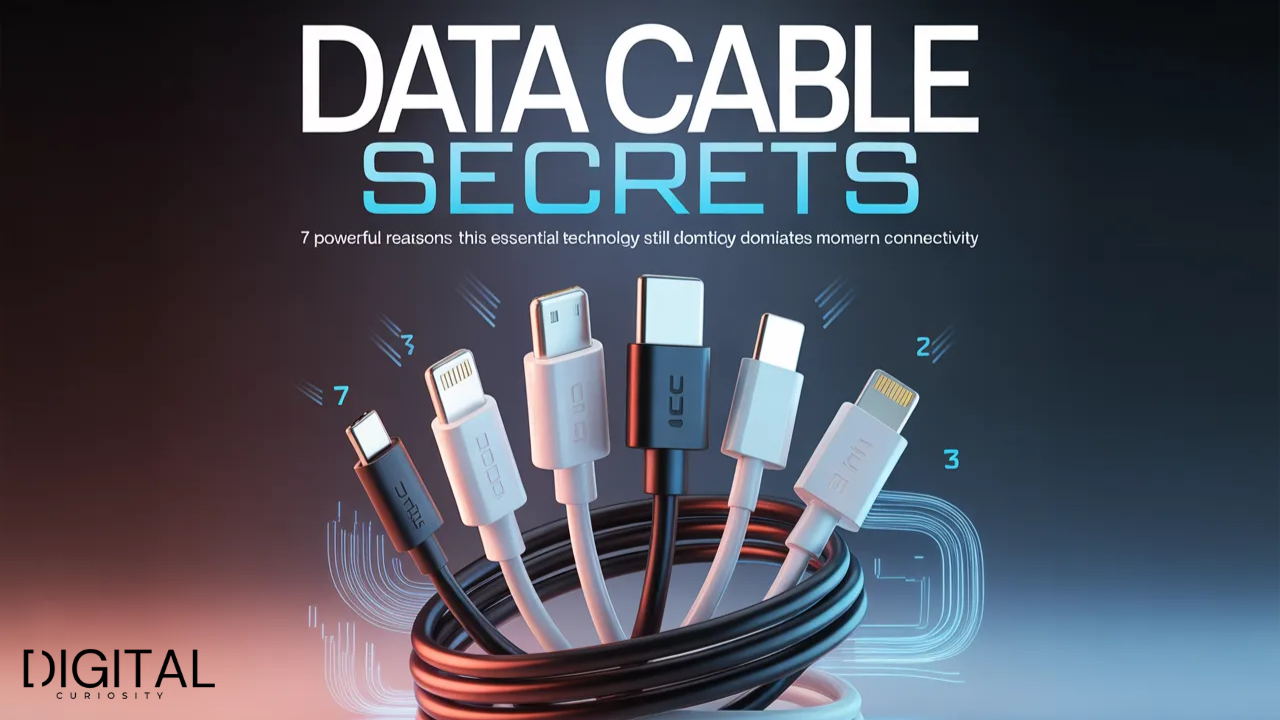
Data Cable Secrets: 7 Powerful Reasons This Essential Technology Still Dominates Modern Connectivity
Introduction
In an age dominated by cloud computing, artificial intelligence, and smart infrastructure, the data cable remains one of the most essential yet misunderstood technologies. Although wireless innovation receives most of the attention, modern digital life still relies heavily on physical connections. From enterprise servers to home broadband installations across the United Kingdom, the data cable quietly ensures stable, fast, and secure information transfer.
As digital demand continues to rise, the relevance of this technology has not faded. Instead, it has evolved. Understanding how a data cable functions, why it still matters, and where it delivers unmatched value is crucial for businesses and individuals alike. This article explores the topic in depth, offering expert insight, technical clarity, and practical relevance.
Why the Data Cable Remains the Foundation of Digital Infrastructure
Despite rapid advances in wireless networking, the data cable continues to form the backbone of global connectivity. Wired connections deliver consistent performance that wireless solutions simply cannot guarantee. As a result, mission critical environments still depend on physical cabling systems.
In the UK, national broadband initiatives and data centre expansions rely heavily on high-quality cabling. Research available through Google Scholar consistently confirms that wired transmission offers lower latency, reduced packet loss, and superior resistance to interference. Therefore, the data cable remains indispensable in high-performance environments.
How Data Cable Technology Works in Practice
At its core, a data cable transmits digital signals between devices using either electrical impulses or light. Copper cables rely on electrical transmission, while fibre optic cables use light pulses. Each method has its own advantages, depending on distance, bandwidth, and application.
As digital ecosystems grow more complex, structured cabling systems ensure that networks remain scalable and efficient. Consequently, modern installations are designed not only for current needs but also for future expansion.
Copper and Fibre Data Cable Solutions Explained
Copper-based cabling remains popular due to affordability and ease of installation. Ethernet standards such as Cat6 and Cat6a are widely used in homes and offices. However, copper cables face limitations over longer distances.
Fibre solutions, on the other hand, offer exceptional speed and minimal signal degradation. In large-scale UK infrastructure projects, fibre has become the preferred option. Academic studies referenced on Google Scholar show that fibre networks significantly outperform copper in both speed and longevity.
Performance Advantages That Only a Data Cable Can Deliver
A well-installed data cable provides predictable performance under all conditions. Wireless networks are vulnerable to congestion, signal loss, and interference. Wired systems eliminate many of these variables.
Furthermore, businesses that rely on real-time data processing benefit greatly from wired connections. Whether supporting cloud platforms or internal servers, a data cable ensures uninterrupted communication and operational stability.
Security Benefits of Wired Data Transmission
Cybersecurity concerns are increasing across all industries. A data cable offers enhanced security by limiting access points and reducing exposure to external threats. Unlike wireless networks, physical connections are harder to intercept.
For regulated sectors such as finance and healthcare, this added security layer is critical. Studies cited through Google Scholar highlight that wired networks experience fewer breach incidents when properly managed.
Expert Insight on the Future of Data Cabling
“Physical data infrastructure will remain essential as long as performance, security, and reliability matter,” says Dr Oliver Grant, Network Engineering Researcher and published IEEE contributor. “Wireless solutions depend on wired backbones, not the other way around.”
This expert opinion reinforces the long-term relevance of the data cable in a rapidly evolving digital landscape.
Data Cable Standards and Compliance in the United Kingdom
Compliance with British and international standards ensures safety, efficiency, and performance. Organisations such as BSI and ISO define strict guidelines for installation and usage. Following these standards reduces downtime and long-term maintenance costs.
Moreover, structured cabling systems improve network organisation and troubleshooting efficiency, which is especially valuable for growing businesses.
Choosing the Right Data Cable for Your Needs
Selecting the correct data cable depends on usage, distance, and performance requirements. Home users may prioritise affordability, while enterprises must consider scalability and compliance.
Planning ahead is essential. Investing in higher-grade cabling today can prevent costly upgrades tomorrow. As digital transformation accelerates, infrastructure decisions have long-term consequences.
Environmental Considerations and Sustainability
Sustainability is becoming increasingly important in technology decisions. Modern data cable manufacturing focuses on recyclable materials and energy-efficient production methods.
Research published on Google Scholar indicates that durable cabling systems reduce electronic waste by extending infrastructure lifespan. This aligns with the UK’s broader environmental goals.
The Evolving Role of the Data Cable in Emerging Technologies
Technologies such as artificial intelligence, edge computing, and smart cities rely on fast and reliable data transmission. A data cable supports these innovations by delivering consistent high-bandwidth connections.
As digital ecosystems grow more interconnected, physical infrastructure remains the silent enabler of progress.
Comparison Table of the 4 Top Data Cable Types
| Data Cable Type | Maximum Speed | Maximum Distance | Best Use Case | Key Advantage |
|---|---|---|---|---|
| Cat6 Ethernet Cable | Up to 1 Gbps | 100 metres | Homes and small offices | Reliable performance with affordable pricing |
| Cat6a Ethernet Cable | Up to 10 Gbps | 100 metres | Business networks and data centres | Reduced interference and higher bandwidth |
| Fibre Optic Single Mode Cable | Over 40 Gbps | Up to 40 kilometres | Telecom networks and long-distance transmission | Extremely low signal loss over long distances |
| Fibre Optic Multimode Cable | Up to 100 Gbps | Up to 550 metres | Data centres and enterprise environments | High-speed transmission at short to medium ranges |
Why Data Cable Quality Directly Impacts Performance
The quality of a cable plays a decisive role in determining connection stability and speed. Poorly shielded cables are more susceptible to electromagnetic interference, which can lead to data packet loss and inconsistent speeds. Consequently, users often misdiagnose network issues as router or ISP problems, when in fact the underlying issue is the cable itself.
Furthermore, higher-quality data cable materials offer better insulation, improved signal integrity, and longer lifespan. For example, cables with thicker copper conductors tend to handle higher frequencies more effectively. Therefore, investing in a premium data cable can reduce maintenance costs while ensuring uninterrupted connectivity across devices.
Data Cable Standards and Compliance in the United Kingdom
In the United Kingdom, cable installations must comply with recognised standards such as ISO and BS EN specifications. These regulations ensure that cables meet safety, performance, and environmental requirements. For commercial installations, compliance is especially important, as non-certified cable systems can invalidate insurance policies and fail workplace inspections.
Additionally, structured cabling systems in offices often require professionally certified data cable solutions to guarantee long-term network efficiency. As businesses increasingly adopt hybrid work models, reliable cabling infrastructure has become a strategic investment rather than a technical afterthought.
Indoor vs Outdoor Data Cable Applications
Selecting the correct cable also depends on whether it will be used indoors or outdoors. Indoor cables are typically designed for flexibility and ease of installation, whereas outdoor data cable solutions are engineered to withstand moisture, UV exposure, and temperature fluctuations.
For instance, outdoor-rated cable often includes weather-resistant jackets and gel-filled cores to prevent water ingress. Without these protective features, standard indoor cables can degrade rapidly when exposed to harsh conditions, leading to signal failure and costly replacements. Therefore, understanding the installation environment is crucial when selecting the right cable.
The Role of Data Cable in Smart Homes
Smart home ecosystems rely heavily on stable and fast cable connections. Devices such as smart TVs, security cameras, voice assistants, and home automation hubs require consistent data transfer to function efficiently. While wireless technology is convenient, wired cable connections often provide superior reliability and lower latency.
Moreover, as smart homes become more complex, structured cabling ensures scalability. Homeowners who install high-grade cable infrastructure today are better positioned to integrate future technologies without extensive rewiring. This forward-thinking approach is increasingly popular among UK homeowners focused on long-term property value.
Business and Enterprise Dependence on Data Cable Systems
In commercial environments, the cable is the backbone of daily operations. From internal communications to cloud-based applications, businesses rely on uninterrupted data flow. Network downtime caused by substandard cabling can lead to productivity losses and reputational damage.
Enterprise-grade cable systems are designed to handle high traffic volumes and provide redundancy. Additionally, structured cabling simplifies troubleshooting and upgrades. As digital transformation accelerates across industries, robust cable infrastructure has become a competitive advantage rather than a mere technical requirement.
Sustainability and Environmental Impact of Data Cable Manufacturing
Sustainability is becoming a key consideration in cable production. Manufacturers are increasingly adopting eco-friendly materials and energy-efficient manufacturing processes. Recyclable insulation materials and reduced use of harmful chemicals are now common practices among reputable brands.
Furthermore, durable cable solutions contribute to sustainability by reducing the frequency of replacements. In the UK, where environmental regulations are becoming stricter, choosing responsibly manufactured cable products aligns with broader sustainability goals while maintaining performance standards.
Future Trends Shaping the Data Cable Market
The future of the cable market is being shaped by emerging technologies such as 5G backhaul, edge computing, and artificial intelligence. Although wireless technologies continue to evolve, wired cable systems remain essential for high-capacity data transfer and low-latency applications.
Additionally, the expansion of fibre-optic networks across the UK highlights the ongoing relevance of advanced cable solutions. As data consumption continues to grow exponentially, demand for faster, more resilient cabling infrastructure will only increase.
Conclusion
In conclusion, the cable remains a foundational element of modern connectivity, supporting everything from personal devices to enterprise networks. Its role extends beyond simple data transmission, influencing performance, reliability, and future readiness. By understanding different cable types, quality standards, and application environments, users can make informed decisions that enhance both current and long-term connectivity needs.
As digital infrastructure continues to evolve, investing in the right cable solution is a proactive step towards seamless communication, improved efficiency, and sustainable growth. Whether for home, business, or industrial use, the importance of a well-chosen data cable cannot be overstated.
Frequently Asked Questions
What is the most commonly used data cable today?
The most commonly used data cable today is Cat6 Ethernet, as it offers a strong balance between speed, affordability, and reliability.
Is fibre optic data cable better than copper?
Fibre optic data cable generally offers higher speeds and longer transmission distances than copper, making it ideal for high-demand environments.
How long does a data cable typically last?
A high-quality data cable can last 10 to 20 years if properly installed and maintained.
Can a data cable affect internet speed?
Yes, a low-quality or damaged data cable can significantly reduce internet speed and cause connection instability.
Are expensive data cables worth it?
Premium data cable solutions often provide better shielding, durability, and long-term performance, making them a worthwhile investment.




6 Comments